O castelo de Alenquer foi conquistado por D. Afonso Henriques, em 1148, procedendo depois à sua reconstrução. Esta região foi ocupada ao longo dos séculos por...
O Chafariz pombalino de Arruda dos Vinhos impõe-se hoje mais pelo seu aparato do que pelas razões utilitárias que, em 1789, estiveram na origem da sua edificação....
A Igreja de Nossa Senhora da Salvação ergue-se no centro da povoação de Arruda dos Vinhos, na zona antiga da vila.
Após a reconquista da vila por D. Afonso...
Situated on the top of the gorgeous Montejunto Mountain, in Cadaval department, these are two interesting structures: the Nossa Senhora das Neves Chapel dated from the 13th century, and what is...
Construção do início do século XX, edificada sobre o antigo forte de S. Catarina, ou Baluarte da Foz, da qual que se pode ainda ver os restos da muralha original, quando...
Este original edifício, construído sobre as ruínas do antigo Forte de Stº. António da Cruz, quase parece um castelo medieval, desafiando a fúria do mar que...
The Cidadela, the Nossa Senhora da Luz Fortress and the Tower, are part of the military fortitudes built between the 15th and the 17th centuries along the Tagus estuary for the Lisboa’s...
Forte militar de defesa da costa, construído por volta de 1643, este monumento de arquitectura militar, barroca, integra-se nas obras de fortificação da entrada da barra do...
The Santo António da Barra Fort, also known as Velho Fort, is a coastal defense military fortitude built by order of Filipe the 1st and was extended after, by order of King joão the...
São Pedro do Estoril Fort is a military fortress of defense of the coast built in the 17th century XVII, in a Mannerist architecture style, in a strategically spot for the defense of Lisboa...
The São Teodósio da Cadaveira Fort was built in 1643, in order to protect the lisboa region Coast from enemies attacks, and to defend as well the entrance of the Tagus river. The fort...
The Fort is situated by the edge of a cliff between the sea and the coast road, and to the East of São João do Estoril. It has a military architecture, inspired in Baroque style....
Forte Velho do Guincho is a military coastal defense fortress built in the 17th century with an architectural mannerist style, situated by the sea in between the Guincho and the Abano Beach.
The...
A Igreja de Santo António do Estoril, ou Igreja Matriz do Estoril, localiza-se na freguesia do Estoril, concelho de Cascais.
O actual templo foi construído pela Ordem de São...
The ‘American type’ Windmill is situated in Alcabideche, on the lovely Cascais department, and constitute nowadays an important heritage of an emerging rural industrialized world....
The Palace was built in the beginning of the 20th century, by Francisco Vilaça, for a summer residence for JorgeO’Neil. The building features eclectic elements, inviting visitors to...
With a residential and civil architecture, the Palace has a construction in mixed masonry and brick, with limestone and wood.
The Palace is situated over the water, on a rocky promontory. This is...
Condes da Guarda Palace was built in the 17th century yet suffered considerable transformations in the 18th century.
Nowadays the Palace houses the headquarters of the Cascais Municipality...
Iniciada em 1902 com projecto do arquitecto Raúl Lino, a Casa de Santa Maria foi mandada construir por Jorge O'Neill para a sua filha D. Teresa. Situada na ponta de Santa Marta, junto ao...
Construction from the 2nd century, in Roman civil architecture style.
According to several researches, this was a "villa" or country-side residence of a very wealthy family, as...
Facing South and with an unique view over the gorgeous river Tagus, Alfama is one of the most typical quarters in Lisboa, and one of the indispensable Tourist visit in order to better know and...
The Águas Livres Aqueduct has been supplying the town of Lisbon of its waters since 1748 and it is considered to be one of the most remarkable examples of 18th-century Portuguese...
O Arco da Rua Augusta é considerado um dos ex-libris da cidade de Lisboa, integrando o conjunto monumental do Terreiro do Paço, e está situado na parte norte da...
Estrela Basílica is one of the most important 18th century buildings in Lisboa. Also known as Basílica do Sagrado Coração de Jesus (Basilica of the Sacred Heart of...
The elegant Martyrs Basilica is situated in the famous Garrett street, in the exquisite quarter of Chiado, in the heart of the cosmopolitan Lisboa city.
With quite ancient origins, it is said...
Classified as a National Monument since 1910, the lovely Santo Amaro Chapel is one of the pleasant treasures of cosmopolitan Lisboa.
Founded in 1549, it is accessed through a steep stairway,...
Situated in one of the most noble and renowned quarters of Lisboa - Belem - the charming Santo Cristo Chapel was built in the beginning of the 16th century, in 1517, integrated in the amazing set...
The Casa dos Bicos (“Beaked House”) is one of the most emblematic buildings of the Portuguese Capital, Lisboa, not only because of its curious name, but also for its façade...
Classified as a National Monument since 1910, the São Jorge Castle rises up on one of the highest hills in Lisboa, and has been since early times a place occupied by Men. The first...
Situated in one of the most noble areas in cosmopolitan Lisboa, the Belém quarter, in front of the majestic Jerónimos Monastery, the Belém Cultural Centre is an architectonic...
Nowadays vestiges of the most ancient defensive wall known in Lisboa (named as “Cerca Moura” - Moorish hedge) can still be found. This defensive system would have been built during the...
Considerada uma das salas de espectáculo mais importantes de Lisboa, o Coliseu dos Recreios é um monumento histórico da capital Portuguesa, situado no coração da...
The Madre de Deus Convent is situated in Xabregas, on the western area of Lisboa. The Convent was built in 1509, at the orders of the Queen Dona Leonor, and houses nowadays the much interesting...
The Santa Justa Elevator, also known as Carmo Elevator, is one of the most interesting monuments of Lisboa historical centre. Conceived by Raoul Mesnier du Ponsard in a Gothic Revival Romantic...
Situated in between the Rossio Square and the Restauradores Square this station, built in 1886/7, in order to connect the city of Lisbon with the Sintra region, it is a masterpiece and a Romantic...
The lovely Encarnação Church is situated in the heart of Lisboa, in the exquisite historical old quarter of Lisboa, Chiado, right in front of the famous Our Lady of Loureto Church....
Situated in the gorgeous historical centre of Lisboa, next to the Cathedral, the Madalena Church is one of the most popular religious temples in this cosmopolitan town.
Several researches claim...
Situated nearby the superb Ajuda Palace, in the cosmopolitan town of Lisboa, the Memória Church is one of the treasures that the Country’s capital has to offer.
Its edification...
A Igreja de Nossa Senhora da Vitória está situada em plena Baixa Pombalina, bem no centro da cidade de Lisboa, na Rua da Vitória, Freguesia de São Nicolau.
A primeira...
The Nossa Senhora da Conceição Velha Church is situated in the heart of cosmopolitan Lisboa, in Rua da Alfandega, nearby the central Comércio Square.
The present building is...
Situated in the exquisite historical old quarter of Lisboa, Chiado, in the historical centre, the charming Nossa Senhora do Loreto Church has remote origins in the 13th century, yet the present...
A Igreja de Santa Catarina, situada na Calçada do Combro, em Lisboa é também conhecida por Igreja dos Paulistas.
A Igreja é assim chamada porque a Ordem Eremita de...
The Santa Luzia Church is situated in a place of great beauty and symbolism: the Santa Luzia viewpoint from where one has a privileged view over the most typical old quarter of Lisboa: Alfama....
The Santo António Church is one of the religious highlights of Lisboa, for it is located in the place where it is said once inhabited Saint Anthony, the popular saint of Lisboa and Padua...
Situated in the traditional Alfama old quarter, in the historical centre of Lisboa, the Santo Estêvão Church is proudly classified as National Monument since 1918.
The present...
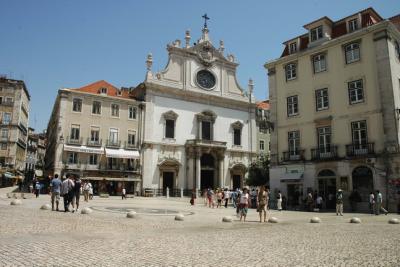
Situated right in the centre of the lovely town of Lisboa, next to Rossio Square, the São Domingos Church dates from the 13th century, being famous for having as a relic part of the...
Situated in the traditional Alfama old quarter, in the historical centre of Lisboa, the São Miguel Church has quite ancient origins, probably dating to the beginning of the Portuguese...
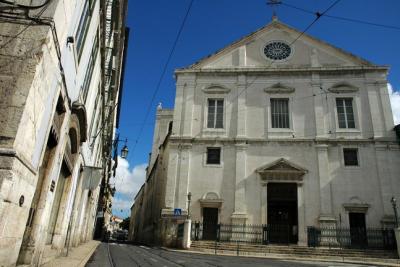
The lovely São Nicolau Church is situated right in the Baixa quarter, on the historical Lisboa city centre, in Prata Street.
The origins of this temple date back to the 12th...
The lovely São Paulo Church is situated in the historical centre of cosmopolitan Lisboa, next to the much frequented Cais do Sodré area, since early times a place of trading and...
The legendary Saint Roch Church is situated in the typical Bairro Alto old quarter, in the heart of the historical centre of cosmopolitan Lisboa.
The Church construction started in 1506, next...
The Church and Monastery of São Vicente de Fora are situated in the lovely old part of Lisboa, considered to be one of the historical monuments of the Portuguese capital, honouring the...
Erguida na segunda metade do século XII, no local onde acamparam as tropas de Dom Afonso Henriques que tomaram a cidade aos Mouros.
Apesar do estilo rococó da última...
A Igreja Paroquial do Santíssimo Sacramento foi criada em 1147, logo depois de D. Afonso Henriques, primeiro rei de Portugal, ter conquistado Lisboa aos mouros...
Começou por ser uma...
The magnificient Jerónimos (Hieronymites) Monastery is considered to be the most prominent monument of Lisbon and certainly the most successful achievement of the Manueline architecture...
Located on the Southern slope of the São Jorge Castle, on the historical centre of wonderful Lisboa, the set of the Museum and Ruins of the Theatre are an important heritage of the region...
Padrão dos Descobrimentos, or Monument to the Discoveries, is a monument that celebrates the Portuguese who took part in the Age of Discovery of the 15th and 16th centuries. It is located on...
The Palace was built in 1640 for the first Fronteira Marquis, D. João de Mascarenhas, hero in the Portuguese Restoration War. The Palace is situated right next to the Monsanto Park and the...
Ajuda was one of the Lisbon quarters that was less destroyed by the 1755 big earthquake. Therefore, the Royal Family decided to move to this part of Lisbon, and built a temporary wooden house while...
The Palace situated in Belém quarter, formerly a royal palace, is nowadays the headquarters of the Portuguese Republic Presidency.
The Palace is composed by a central building completed...
The National Pantheon is situated in the São Vicente de Fora old quarter of Lisboa, in the Santa Engrácia Church.
The current building is located in the place where a Church in 1568...
A Ponte sobre o Tejo, ou Ponte 25 de Abril, é uma ponte suspensa, com um comprimento total de cerca de 2.280 metros.
É uma ponte rodo-ferroviária que liga a cidade de...
The construction of the Carmo Convent was ordered in 1389. Situated in a privileged position, over Rossio and the São Jorge Castle hill, right in the cosmopolitan Chiado quarter.
The...
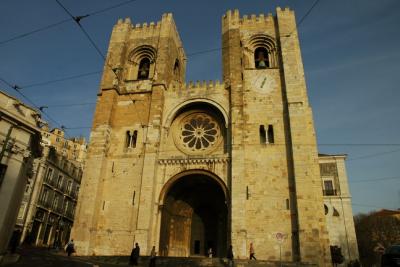
According to several historical studies, all indicates that the Lisboa Cathedral (Sé, in Portuguese) was built over an old Muslim mosque.
This Cathedral started to be built in 1147, when...
O Teatro Nacional de São Carlos é a principal Casa de Ópera de Lisboa, e foi inspirado no La Scala de Milão.
O teatro está localizado no centro histórico...
O São Luiz Teatro Municipal é um teatro localizado em Lisboa, sendo considerado uma das mais importantes salas de espectáculos da cidade.
Sala cosmopolita, cujos foyers eram...
The Belém Tower was built in homage to the patron Saint of Lisboa: São Vicente, in the place where was once anchored the Grande Nau (Big Ship), that combined firepower with the...
Situated in the lovely village of Lourinhã, this Gothic Church was built in the second half of the 14th century and classified as a National Monument in 1922.
In the place where the...
José Franco was born in 1920. His parents were potters by profession, manufacturers of small tiles that farmers in the region used in their homes, and so he too began to manufacture and...
Built by D. João V in 1711, is the most sumptuous convent and Portuguese Baroque monument.
The monument is part of the so-called Joanino baroque, and is inspired on the Spanish and...
A Igreja do Palácio Nacional de Mafra ergue-se no centro da fachada, delimitada por duas altas torres sineiras de linhas sinuosas. O seu acesso é feito por uma escadaria e...
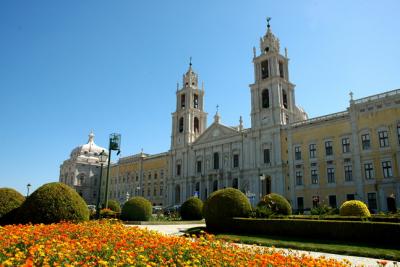
The monumental Mafra National Palace and Convent construction was ordered by king João the 5th in the first half of the 18th century, in consequence of a promise that the young king had...
The Cheleiros Old Bridge is situated in the pleasant village of Cheleiros, in the charming Mafra department.
The Bridge is usually referred to as Roman, yet the present building dates probably...
A Capela de São Sebastião de Barcarena situa-se na periferia da freguesia de Barcarena, no concelho de Oeiras.
Dedicada a São Sebastião, protector dos doentes da...
São muitas as dúvidas a respeito da origem exacta dos cinco fornos de cal que, actualmente, se inserem no centro histórico de Paço d'Arcos. Parece certo que o...
Built in 1647, the São Bruno Fort is one of the coastal defence built at this epoch, in order to protect Lisboa region from enemies attacks through the Atlantic Ocean, and the entrance of...
São João das Maias Fort is part of the coastal defense constructions that were built after Restoration of Portuguese Independence around the year 1644.
The Fort location was...
São Julião da Barra Fort is considered to be the bigger existing construction of maritime defense in Portugal. The Fort began to be built in the 16th century with prestigious...
Santo Amaro Fort, also known as Areeiro Fort was built around the year 1659. This is a fortress of small dimensions integrated in the defensive coastal line to protect the mouth of the river Tagus,...
The construction of this Palace was initiated by order of the Infant D. Francisco, son of the King D. Pedro the 2nd and of D. Maria Sofia Neuburg. However, the Infant passed away in 1742, before...
A origem da Quinta dos Aciprestes remonta ao século XIII, quando toda aquela zona estava incluída na «Herdade da Ninha de Ribamar».
Mais tarde no século...
Classified as a building of public interest, this is one of the most curious constructions of maritime defense, not only for its architecture but also because of where it is situated. Bugio is a...
The Castelo dos Mouros (Moorish Castle) is located in the astonishing Sintra, on a high hill overlooking the village, also being one of its most important tourist attractions. It is part of the...
Capuchos Convent, also known as Santa Cruz or the Cork Convent, is situated in the forest, in Sintra’s Mountain Range, 9 km from the city centre.
The Convent, built in 1560 by Dom...
The São Mamede de Janas Rural Chapel is situated in the Sintra department, and is famous for its religious festivities.
This is a region of very ancient human occupancy, and some say...
Seteais Palace is situated at about 1km from Sintra’s historical centre. The Palace was built in the 18th century, ordered by Daniel Gildemeester, Holland Consul in Portugal.
With a...
The Monserrate Palace is one of the best illustrations of the Romantic architecture in Sintra. The original building was built in the 18th century in imitation of a medieval castle.
The park and...
The Regaleira Palace and Estate, also known as also known as the "Palace of Monteiro the Millionaire”, was built in the beginning of the 20th century, born from the imagination of its...
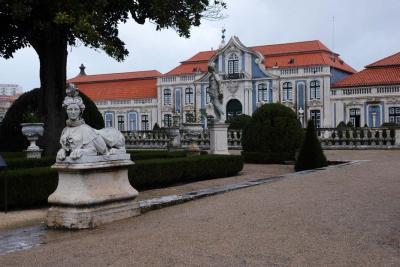
The Queluz National Palace dates back from 1747, and represents one of the finest examples of 18th-century Portuguese architecture. The main part of the Palace was only finished, however, in 1758....
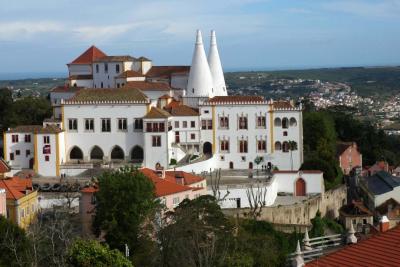
Also they known as Paço Real (Royal Palace) or Palácio da Vila (Town Palace), the Sintra National Palace is situated in the Praça da República, the “centre or the...
National Pena Palace, dating from 1839, is situated about 4,5km from Sintra’s historical centre, on at the top of the Monte da Pena, and is considered to be the most complete and beautiful...
Situated at about 50 meters from the sandy area of the Praia Grande Beach, in Sintra, in the Sintra-Cascais Natural Park area, these Dinosaurs footprints were discovered in 1981, when a Geology...
The Catribana Bridge, located over the Samarra streamlet, is situated next to the charming small village of Catribana, in the São João das Lampas village, on the wide Sintra...
The Peninha Sanctuary is located in a architectural group composed by the old São Saturnino small church, dating from the period of the foundation of the first Portuguese kingdom, yet...
O castelo de Torres Vedras foi conquistado aos muçulmanos por D. Afonso Henriques, em 1148, que doou esta fortificação a D. Fuas Roupinho, cavaleiro que colaborou nas lutas...
Descoberto nos anos 30, pelo arqueólogo Leonel Trindade, o Castro de Zambujal, no Concelho de Torres Vedras, é um dos principais povoados fortificados da Península...
The Chafariz do Canos is the most monumental Gothic national fountain that has survived until today.
It is the most characteristic building of Torres Vedras.
The earliest mention of this monument...
The Convento de Nossa Senhora da Graça, in Torres Vedras, was founded in the late fourteenth century and would become right away - and up to the nineteenth century - the main religious...
Dated from the late fifteenth century, this is a national monument wich has had additions over the centuries.
From the original monument it only preserves the façade and the door,...
Classified as a national monument and rebuilt in the sixteenth century façade with a Manueline portal. The Church is decorated under a Renaissance influence and is topped by...
Situated in the top of one of the highest hills that surround the lovely town of Torres Vedras, the São Vicente Fort constituted an important part of the ‘Linhas de Torres’, a...
Joaquim Agostinho was the most notable Portuguese cyclist, born on April 7, 1943 in Brejenjas, Torres Vedras.
He began cycling at Sporting Clube de Portugal, the team that discovered him training...